Six layers. Six pillars. One system.
A sovereign architecture for studying human consciousness, from community to computation to a navigable map of inner experience.
.jpg)
Six layers, each feeding the next.
Together they form a cycle: experience generates data, data generates knowledge, knowledge refines the next experience.
Community. The human foundation.
Our research starts with people. The community of explorers, certified psychonauts, node leaders, and researchers is the living base of the entire model. Without it, none of the layers above have anything to study.
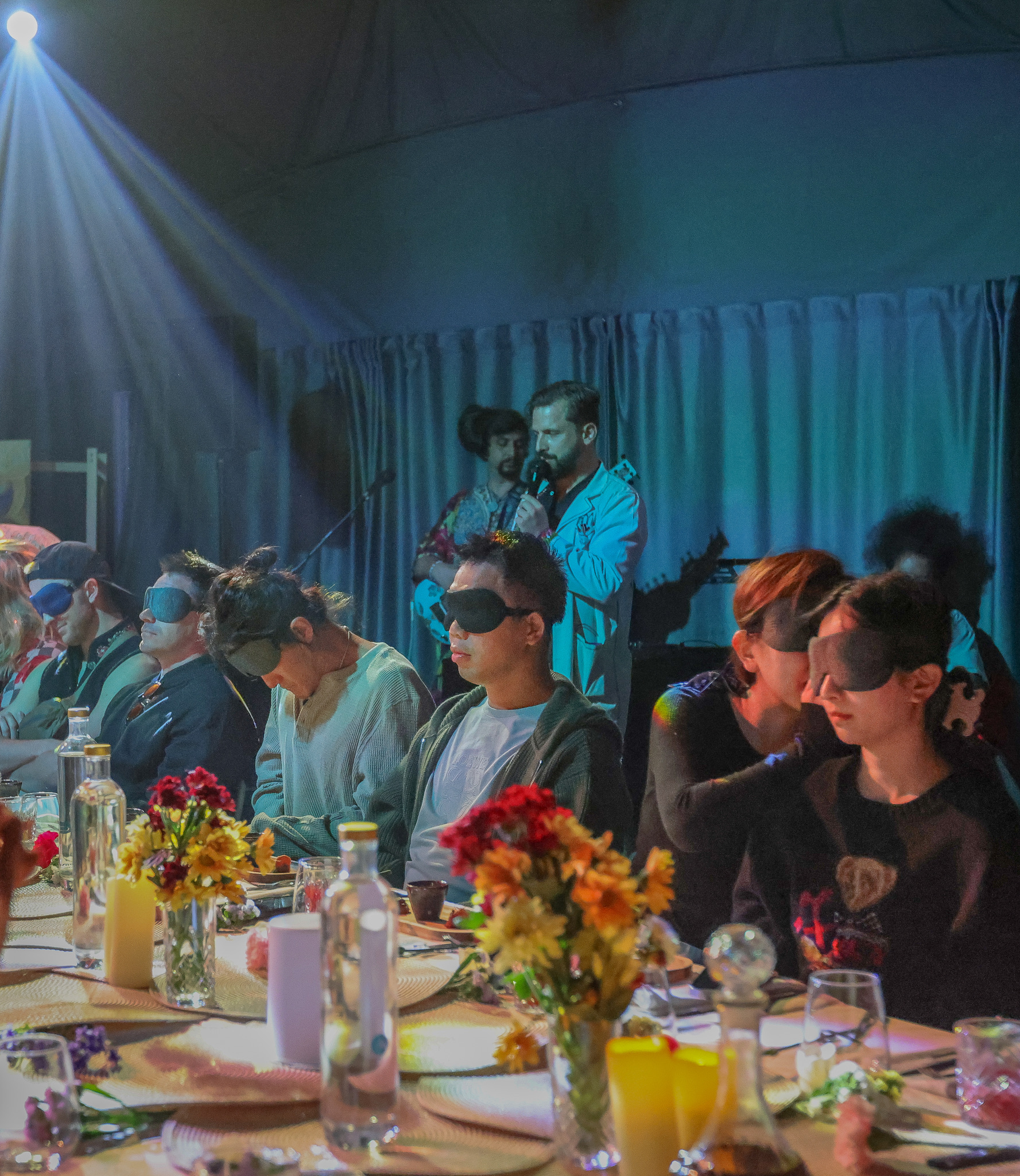
Quality / Ground Truth. Calibrated observers.
What distinguishes Sensoria's data from a survey is the combination of calibrated observers and intentional contexts. Trained reporters work inside experiential containers that are iteratively refined, where the stimulus, context, and conditions of recording are known.
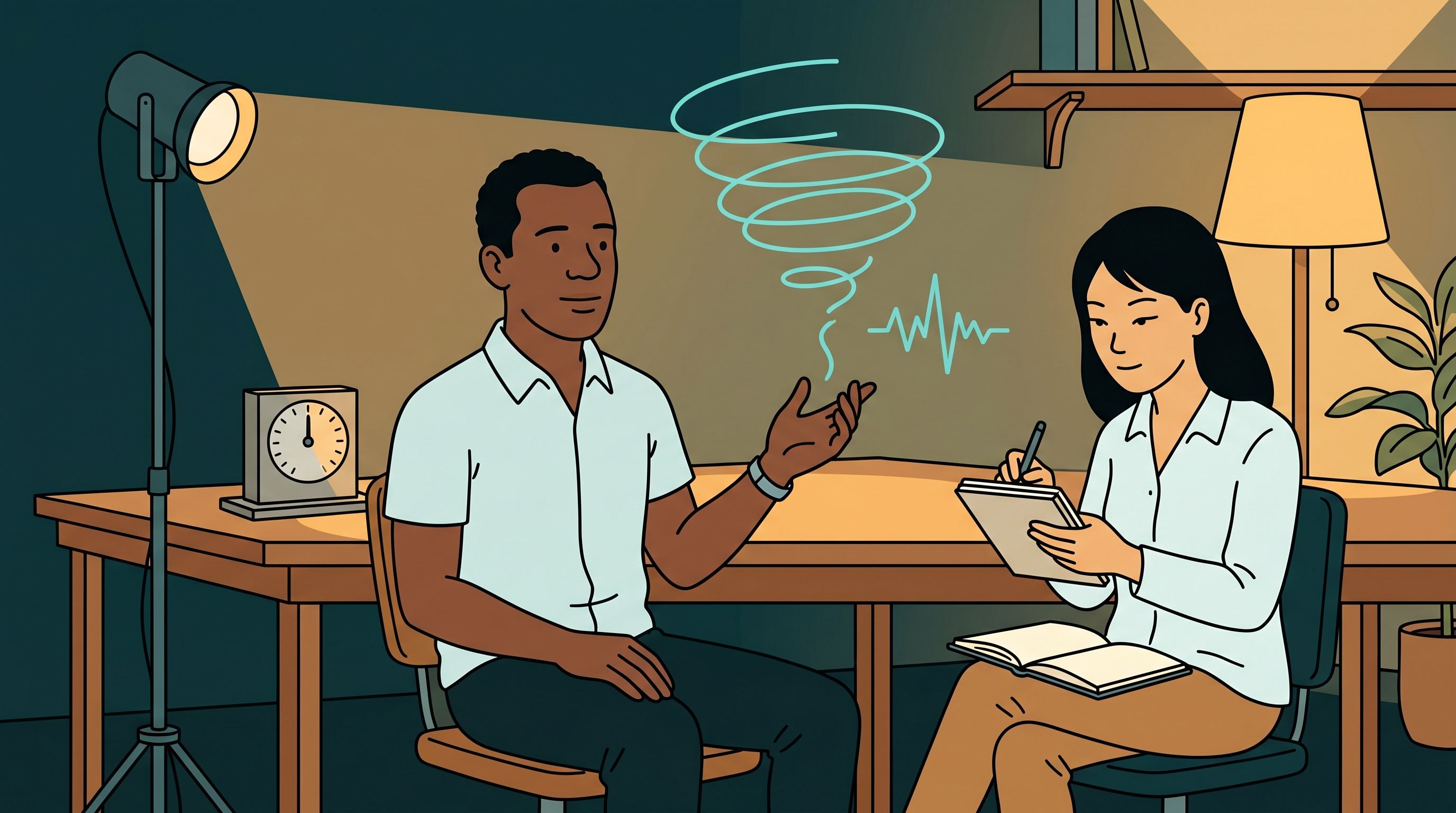
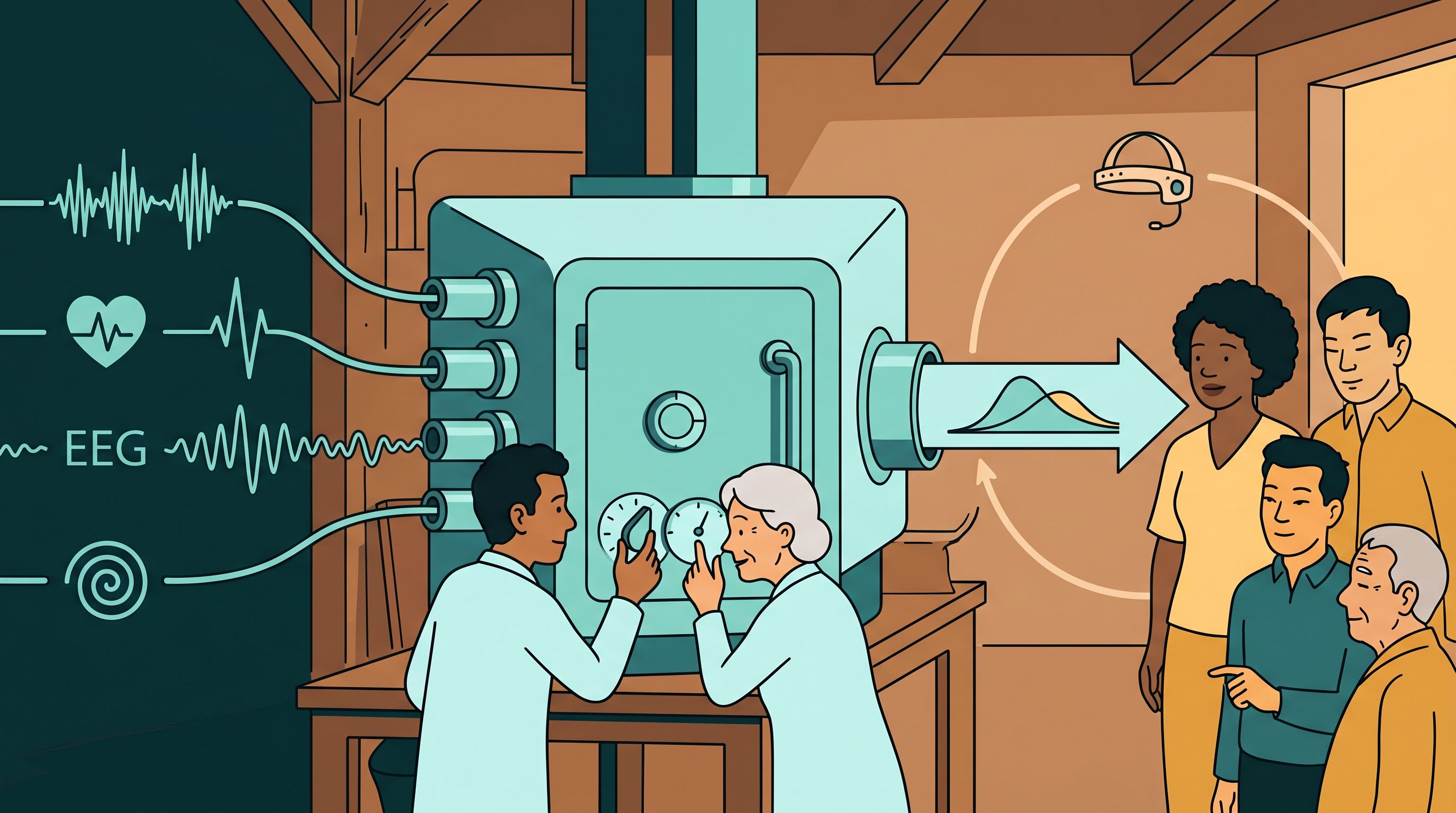
Capture. Multimodal, low-friction.
Rich phenomenological data requires capture tools that work in the flow of real experience. The capture layer fuses subjective report with physiological signal on a shared timeline, embedded in the experience itself.
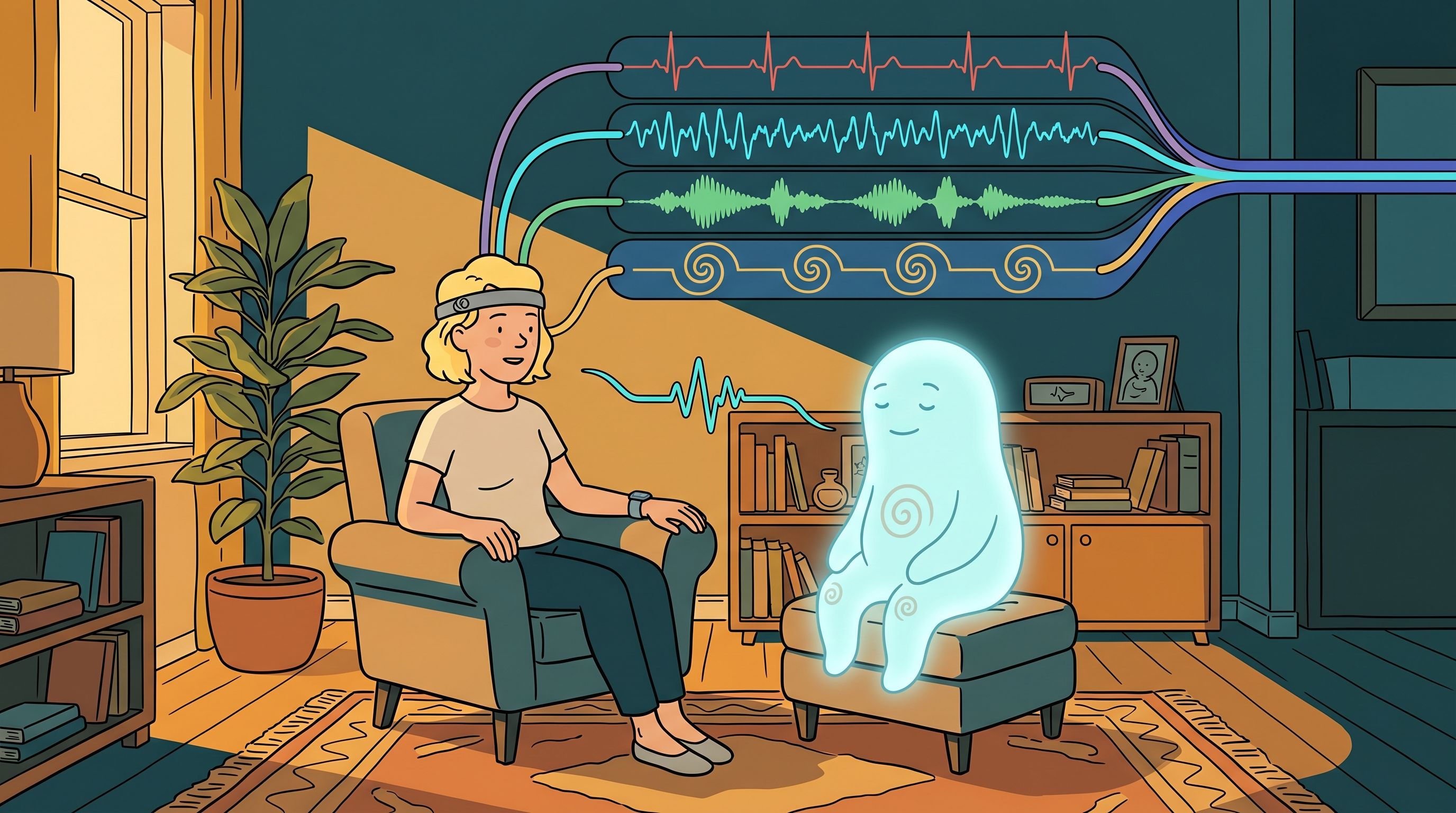
Data Sovereignty. Privacy first by design.
Consciousness research requires our most intimate data. The sovereignty layer is the design commitment that participants own their data, that computation comes to data, and that consent is dynamic and revocable.
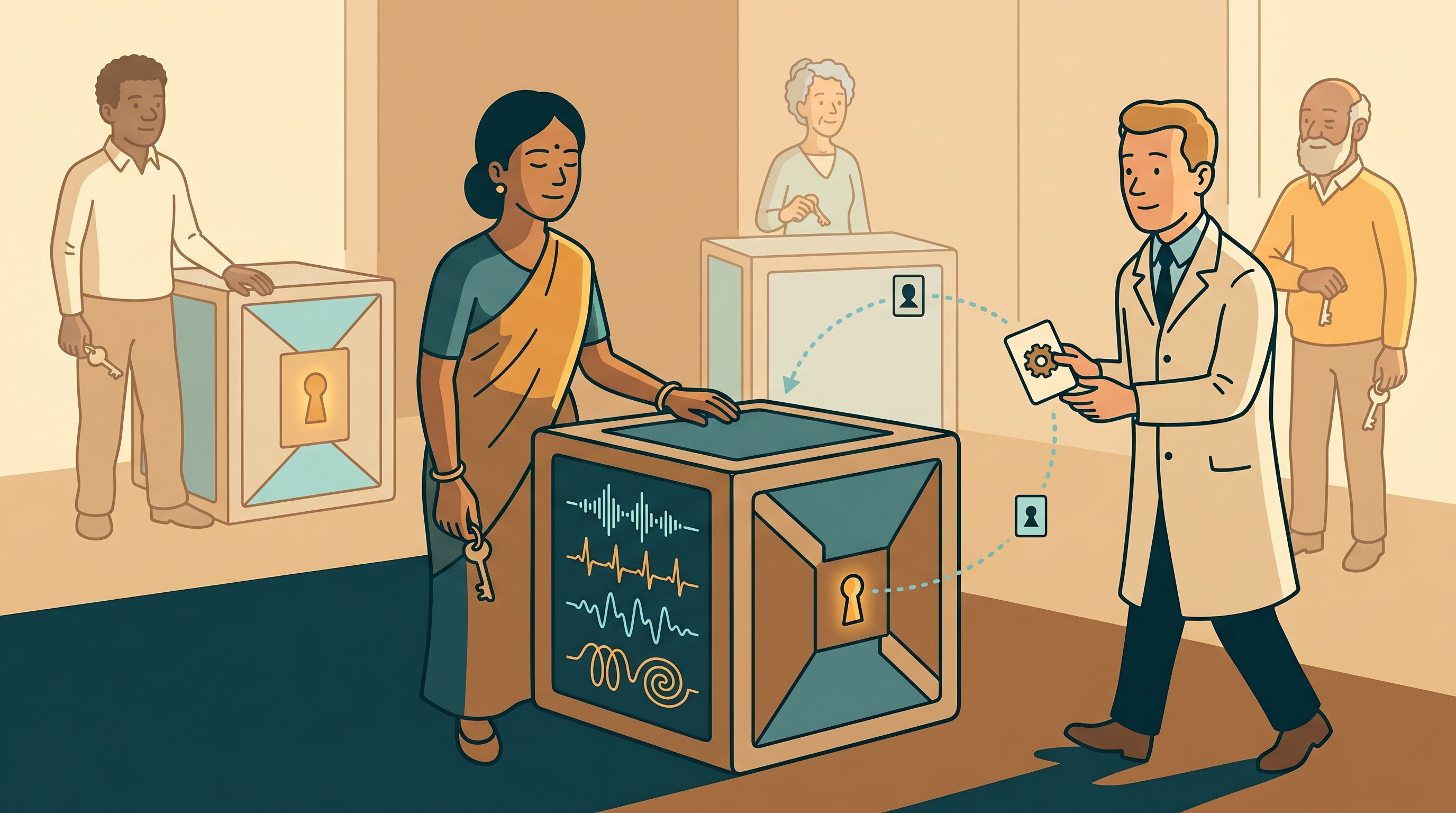
Computation. Analysis without exposure.
Between raw data and the knowledge that emerges from it sits a computation layer designed to process consented data without exposing it. Aggregate insights flow back to the community, while individual data never leaves the participant's control.
Knowledge. The map.
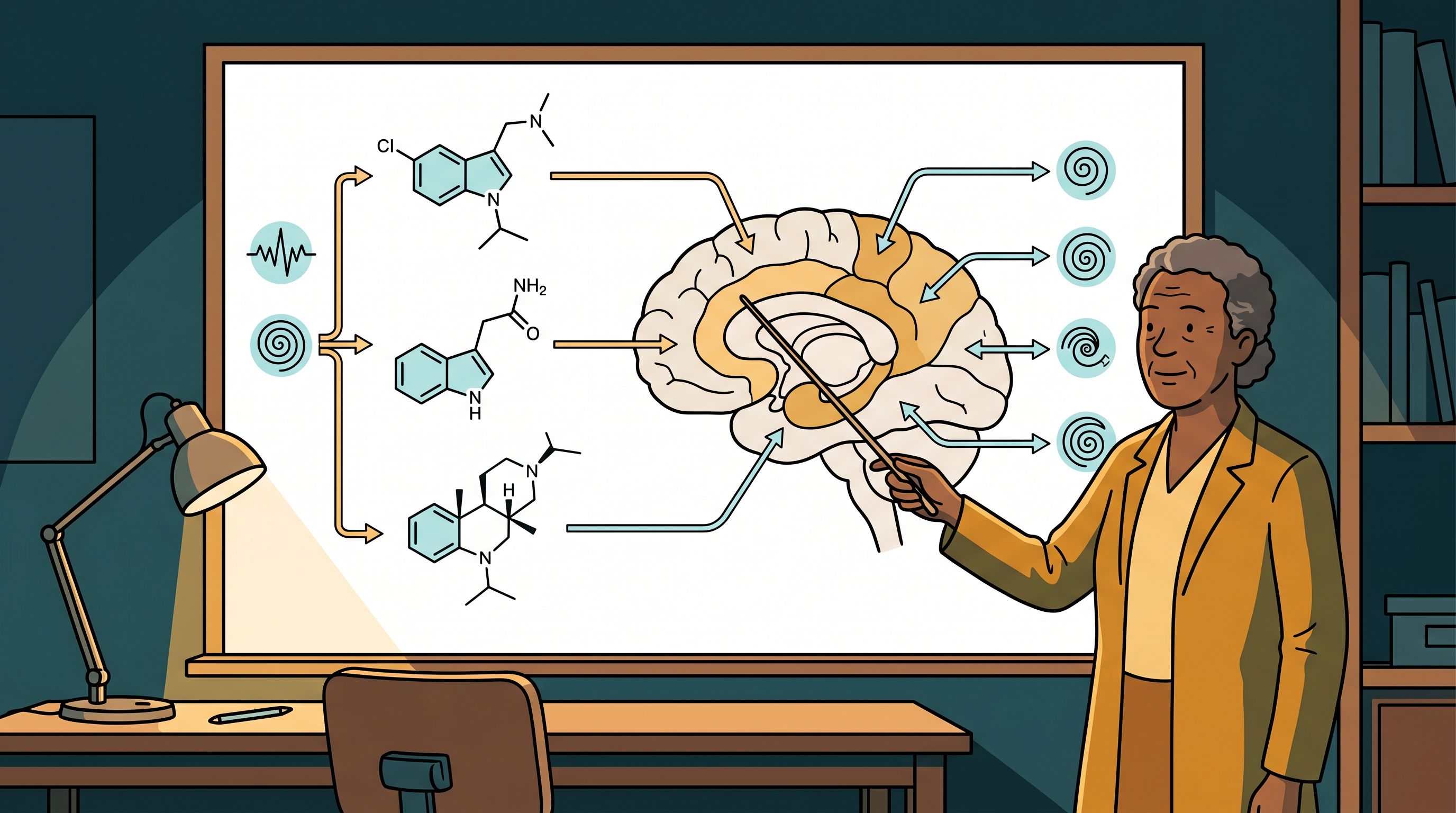
The output of the system. A multidimensional, navigable view of conscious experience where distances, trajectories, and relationships between states become measurable. The Neurophenomenological State Space is the work in progress that every layer below feeds into.
Six components, each addressing a layer of the model.
Psychonaut Certification
Training in phenomenological reporting, state navigation, and data protocols. Certified psychonauts produce the calibrated observations the science depends on.
Get CertifiedState/Trait Engineering
The methodological discipline of designing conscious states with the transition from state to trait in mind. How to shape state, trait, and context together with intention. Minimal sufficiency: the lightest intervention required to reach the target state.
Euqualia
A sovereign personal companion for mapping the felt quality of experience. Adaptive interviewing trained in microphenomenological method, meeting each person at their level of sophistication.
NeuroPhen Suite
A multimodal capture approach fusing first-person report with physiological signal on a shared timeline. Subjective and objective channels examined together rather than separately.
Sovereign Data
The Sovereign Data Research Fabric. Encrypted personal vaults, computation that comes to data, dynamic and revocable consent. The design commitment that privacy is architectural.
Read the SDRF White PaperNPSS
A multidimensional model of conscious experience integrating neurochemistry, neural dynamics, and first-person report into a single coordinate system.